TEXTO 2
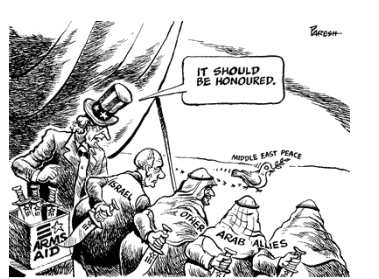
TEXTO 3
US Arms Sales to Middle East Send Signal to Iran
By Gidon Belmaker
Dating back to the Cold War, American military aid to its Middle Eastern allies(1) has been one of the key factors affecting the power balance in the conflict-filled area.
The U.S. foreign aid policy in the Middle East “evolved over the years from a focus on preventing Soviet influence from gaining a foothold(2) in the region, and from maintaining a neutral stance(3) in the Arab-Israeli conflict, to strengthening Israel’s military and economy, and using foreign aid as an incentive to foster(4) peace agreements between countries in the region,” according to a congressional research service paper on aid to the Middle East. The United States is committed to keeping Israel's strategic advantage over its neighbors.
American aid in the Middle East is distributed to a wide variety of countries, some of which are in conflict with one another. The Saudi ruling(5) family is known for its extreme religious views and was accused in the past of supporting the Palestinian terrorist group Hamas.
Disponível em: <http://www.theepochtimes.com/n2/content/view/45545/>. Acesso em: 7 fev. 2011. (Adaptado).
Glossary
(1) Allies: countries that have agreed to help and support another country, especially in case of a war.
(2) Foothold: a strong position from which somebody can make progress and achieve success.
(3) Stance: position.
(4) Foster: to encourage something to develop.
(5) Ruling: having control over a particular group or country.
OXFORD ADVANCED LEARNER’S DICTIONARY. 6. ed. Oxford University Press, 2000.
Analisando a relação entre os textos 2 e 3, infere-se que eles